How to Become a Witch in 2026: A Beginner's Guide
First: what does it actually mean to be a witch?
The word witch looks simple until you try to define it. Online, several different ideas are often folded into one: witchcraft as a set of practices, witchcraft as a spiritual identity, witchcraft as religion, and witchcraft as folk tradition. They overlap, but they are not identical.
Witchcraft as practice can include ritual, spellwork, divination, charms, plant lore, candle work, spirit work, meditation, symbolic acts, or other forms of magic. Not every practitioner interprets these things in the same way. Some understand magic spiritually; others approach parts of the craft symbolically, psychologically, culturally, or as a form of contemplative practice.
Witchcraft as identity is different. Two people may perform many of the same practices while only one chooses the word witch. There is no universal authority that grants the title across modern witchcraft.
Witchcraft as religion applies to some paths but not all. This is where one of the most useful beginner distinctions appears: Wicca and witchcraft are not synonyms. Wicca is a modern Pagan religion strongly associated with Gerald Gardner and the development of British Wicca in the mid-twentieth century. Witchcraft is a much broader category and can exist entirely outside Wicca.
This distinction matters because some traditions are initiatory. Traditional Gardnerian and Alexandrian Wicca, for example, are transmitted through coven structures and initiation. Much contemporary eclectic witchcraft, by contrast, is solitary and does not require institutional permission.
If you want to delve deeper into this topic, keep reading the following article: What Is Witchcraft?
A little history will save you from a lot of bad witchcraft advice
One of the most persistent modern stories imagines an uninterrupted secret religion linking today's witches directly to the people accused during the European and colonial witch trials. The historical picture is far more complicated.
Historians of witchcraft such as Ronald Hutton and Owen Davies have shown how modern Pagan witchcraft emerged from a mixture of older folklore, ceremonial magic, occult revival movements, Romantic ideas about pre-Christian religion, and twentieth-century innovation. This does not make modern witchcraft less meaningful. Traditions do not need to be unchanged for centuries to be real.
The witch trials also deserve care. Many people prosecuted for witchcraft were not members of an organized witch religion. Accusations arose within particular social, religious, judicial, and political contexts. Folk healing, charms, visionary experiences, neighborhood conflicts, theology, rumor, and fear could all become part of the machinery of accusation.
The modern history is interesting in its own right. Gerald Gardner was central to the emergence of Wicca; Doreen Valiente played a major role in shaping its ritual and poetic language. Later writers and movements carried witchcraft in many different directions. Margot Adler documented the striking diversity of American Paganism, while Scott Cunningham helped normalize solitary practice for readers who had no coven nearby.
Knowing this changes the beginner's question. Instead of asking, “What did witches always do?”, you can ask something much more useful: Where does this particular practice come from, and what did it mean in that context?
Step 1: Read before you rush to choose a label
Beginners are often introduced to witchcraft as if it were a collection of aesthetic categories: green witch, kitchen witch, sea witch, lunar witch, crystal witch. Those labels can be enjoyable and useful, but they are not entrance exams. Start with ideas rather than identities.
Explore several broad areas:
- Folk magic: local charms, protection, healing customs, household practices, and regional traditions.
- Wicca: a modern Pagan religion with its own theology, ritual forms, festivals, ethics, and initiatory traditions.
- Traditional witchcraft: a varied modern field often drawing on folklore, land-based practice, spirit work, and non-Wiccan approaches.
- Ceremonial magic: formal ritual systems influenced by Hermetic, astrological, Kabbalistic, and occult traditions.
- Green and kitchen witchcraft: contemporary approaches centered on plants, domestic life, food, seasons, and everyday ritual.
- Divination: tarot, runes, scrying, bibliomancy, lots, and other methods of symbolic interpretation.
- Astrological and planetary magic: systems that connect ritual timing and symbolism with planets, signs, hours, and days.
- Ancestor and spirit practices: traditions involving remembrance, offerings, relationship with the dead, or spiritual beings.
You can belong to more than one category, and you can change your mind. A label should describe a practice that already has some substance behind it, not become a costume you feel obliged to fill.
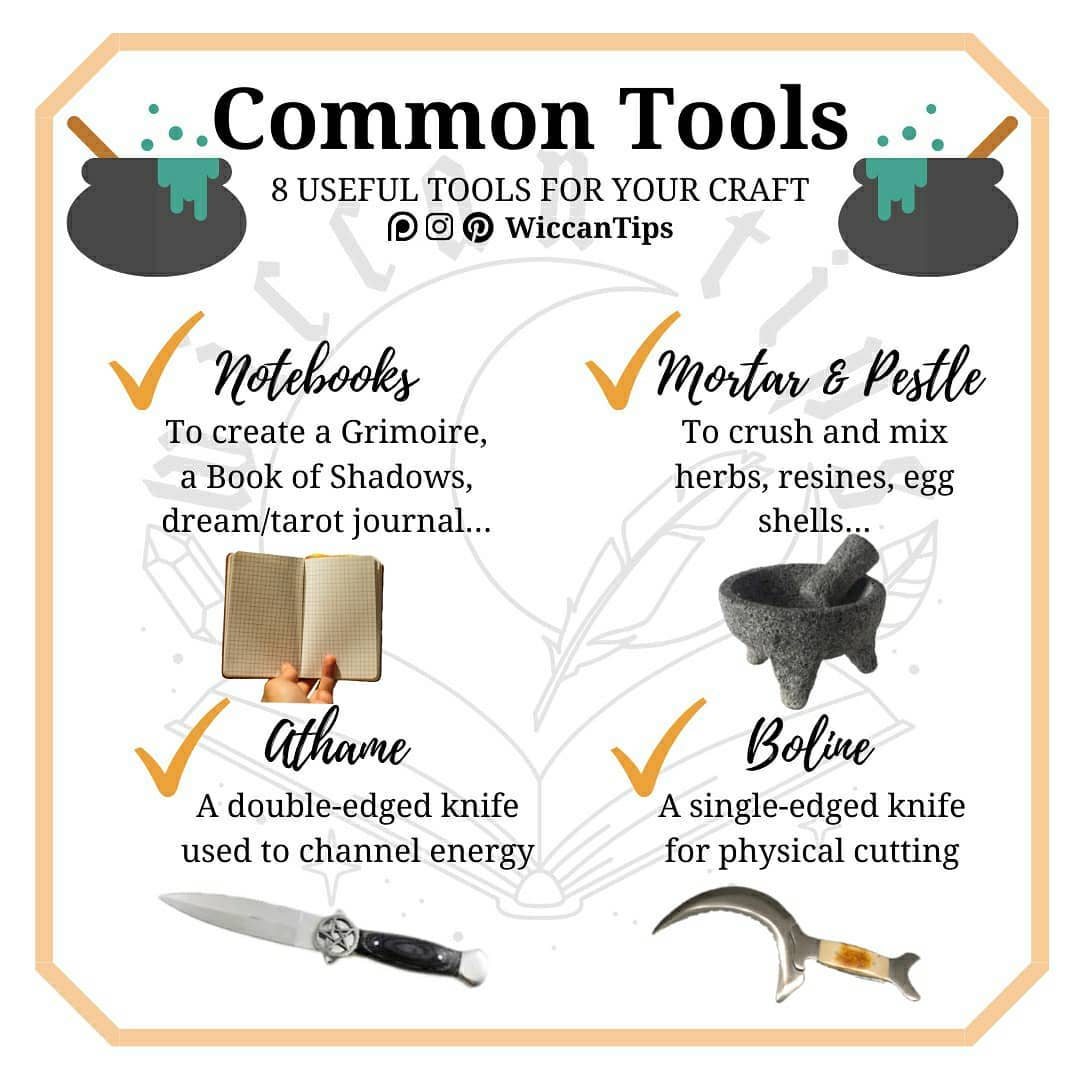
If you want a practical companion article about tools, see The Witch Starter Pack: What You Really Need.
Step 2: Learn to observe before you learn to cast
This is less glamorous than buying an altar cloth, which is exactly why it is so useful.
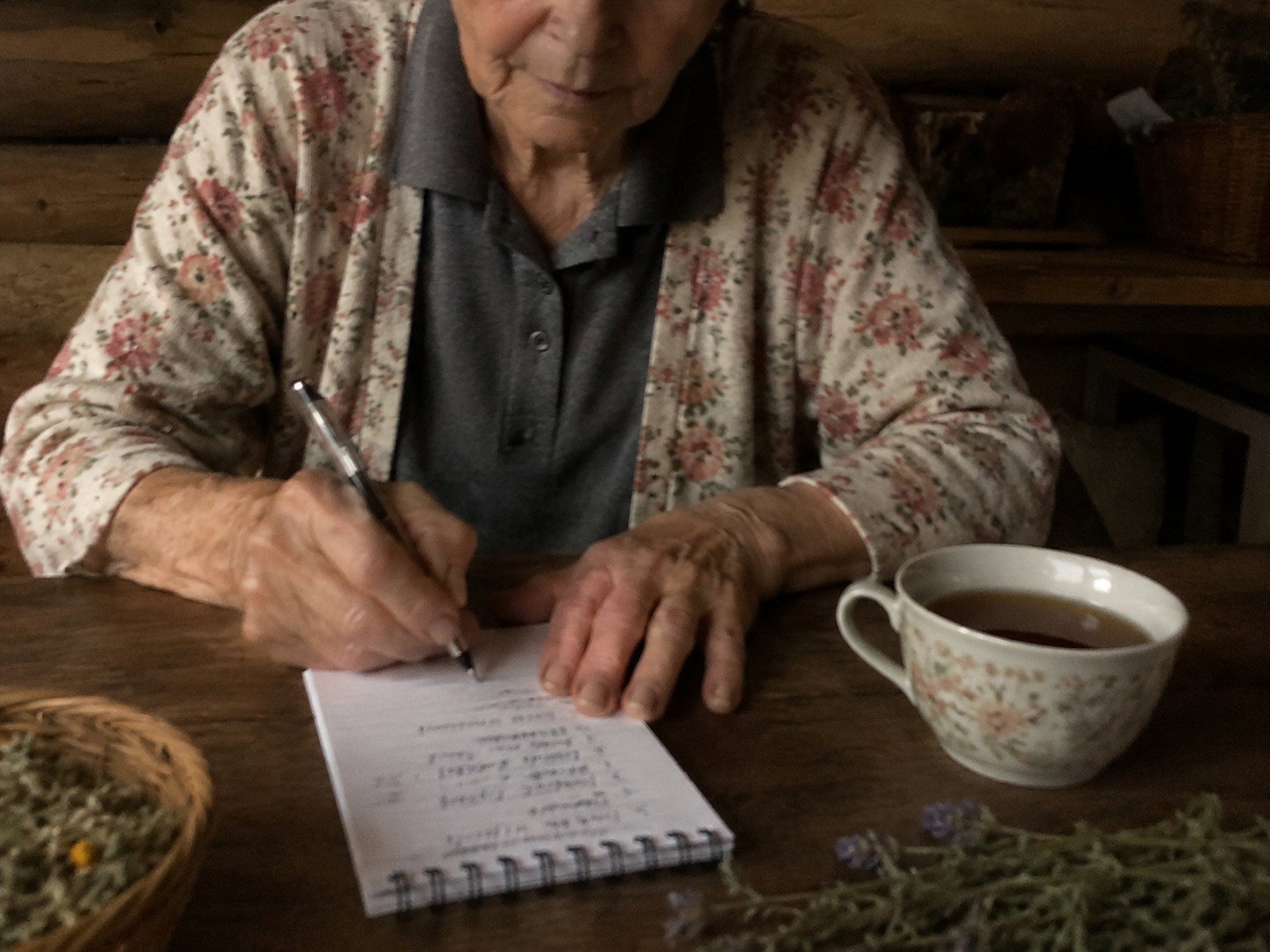
Spend a few weeks paying deliberate attention to the world you actually inhabit. Watch the moon change. Notice when sunrise and sunset begin to shift. Learn the names of a few plants in your neighborhood. Observe the weather. Record your dreams. Notice recurring images without immediately deciding that they are messages.
Witchcraft books often inherit symbolism from climates and cultures far away from the reader. Your practice becomes more personal when you also know your own place: what grows there, which birds appear, how the seasons behave, what the sky looks like from your window.
A magical practice does not have to begin with extraordinary experiences. It can begin with becoming less inattentive to ordinary ones.
Step 3: Start a grimoire — but make it yours
You can call it a grimoire, a Book of Shadows, a magical journal, or simply a notebook. The name matters less than the habit.
Do not begin by filling fifty pages with correspondence charts copied from the internet. Record things you can actually use:
- books and sources you have read;
- rituals you attempted and how you structured them;
- dreams and recurring symbols;
- tarot or divination readings and what later happened;
- plants, objects, prayers, symbols, or traditions you want to research;
- questions you cannot yet answer;
- experiments that felt meaningful — and those that did not.
The last item matters. A working notebook should contain failed ideas, doubts, revisions, and contradictions. If every page confirms what you already believed, you are documenting a mythology about yourself rather than a practice.
Step 4: Go deep on a few foundational practices
A common beginner mistake is to collect spells faster than one can understand them. Ten carefully studied practices will teach you more than five hundred saved social-media posts.
Good foundations might include:
- a simple cleansing practice;
- a basic protection practice;
- meditation, breath, visualization, or concentration;
- candle symbolism and basic fire safety;
- one form of divination;
- simple sigil work;
- a small altar or intentionally prepared space;
- grounding and a clear closing practice after ritual.
You do not need to do all of these. Choose two or three. Repeat them. Change one variable at a time. Write down what you notice.
You do not need an expensive witch kit
Modern witchcraft has become a substantial consumer aesthetic: crystals, subscription boxes, handcrafted wands, rare herbs, elaborate tarot decks, altar furniture, ritual oils. Some objects are beautiful and may become meaningful to you. None of them is proof that a practice exists.
A candle, a bowl of water, paper, thread, salt, ordinary kitchen herbs, a notebook, and a deck of cards can take a beginner surprisingly far. Historically, folk practices commonly relied on materials people already possessed or could obtain locally.
Step 5: Learn correspondences — and then question them
Beginner charts often tell you that a color, herb, crystal, day, planet, or direction has one fixed magical meaning. Treat these charts as maps drawn by particular people, not laws of physics.
Correspondences can arise from folklore, medicinal history, mythology, astrology, ceremonial systems, religious symbolism, color symbolism, or a modern author's synthesis. Two traditions can assign different meanings to the same plant without either one being “wrong” inside its own system.
So when you read that rosemary is protective or basil attracts prosperity, add a second question: according to whom? Trace the association when you can. Research transforms a memorized list into knowledge.
Step 6: Choose one divination system and stay with it for a while
Tarot is a common starting point because it has a rich symbolic vocabulary and an enormous body of literature, but it is not mandatory. Runes, playing cards, bibliomancy, scrying, and other systems may appeal to you more.
The important part is depth. Learn one symbolic language well enough to recognize how meaning changes with context. Record readings before you know their outcomes. Return to them later. This is one of the simplest ways to separate what seemed striking in the moment from what actually proved useful.
Step 7: Understand the anatomy of a ritual
Ritual can look mysterious from the outside because traditions dress it in different symbols. Underneath those differences, many rituals contain some familiar components:
- Intention: what is this working for?
- Preparation: what space, objects, words, or state of mind are needed?
- Boundary: how is ordinary time separated from ritual time?
- Symbolic action: what physical act expresses the intention?
- Focus: where is attention directed?
- Closing: how is the working deliberately ended?
- Reflection: what happened, and what did you learn?
Casting a circle, invoking quarters, calling deities, or using ceremonial tools are not universal requirements. They belong to particular systems. Learn the system before assuming its vocabulary is the grammar of all witchcraft.
Step 8: Practice discernment as seriously as you practice magic
This may be the most important skill in the article.
Human beings are excellent pattern-finders. That is part of what makes symbolism, divination, myth, poetry, and ritual so powerful — and it is also why practitioners need skepticism.
Not every coincidence is an omen. Not every dream predicts something. A candle flame can move because of air currents. A difficult week does not automatically mean someone cursed you. Once you expect a symbol, you will notice it more often.
Discernment does not require you to dismiss mysterious experiences. It asks you to resist explaining them too quickly. Write the experience down. Consider ordinary explanations. Notice whether it repeats. Ask what evidence would change your interpretation.
A healthy spiritual practice should make your relationship with the world richer, not make the world feel like an endless sequence of threats and secret messages.
What about closed traditions and cultural boundaries?
Not every ritual, initiation, title, or religious practice is available simply because someone described it online.
Some forms of witchcraft are initiatory. Other magical or spiritual practices belong to living religious, Indigenous, or culturally specific communities whose teachings are transmitted through family, priesthood, community, lineage, or formal initiation.
Before adopting a practice, ask where it comes from, whether outsiders are actually invited to use it, what the tradition's practitioners say about it, and whether you are learning from them or from someone selling a simplified imitation.
Respect does not require treating cultures as sealed museum cases. It requires enough patience to recognize that a spiritual practice can carry obligations and meanings that are invisible when reduced to an aesthetic.
Your first month of witchcraft: a simple plan
Week 1 — Read and observe
Read from at least two different perspectives. Begin a notebook. Watch the moon and your local environment. Write questions rather than rushing toward conclusions.
Week 2 — Build your notebook
Research a few symbols, plants, or practices that genuinely interest you. Record sources. Notice where different authors disagree.
Week 3 — Learn one system
Choose tarot, another form of divination, candle work, meditation, sigils, or another foundational practice. Work with it repeatedly instead of sampling five new systems.
Week 4 — Create one simple ritual
Design a small working with a clear intention, simple materials, a beginning, an action, and a deliberate ending. Afterwards, write down what happened without embellishing it.
Common beginner mistakes
- Thinking you must buy special tools before you can begin.
- Confusing Wicca with all forms of witchcraft.
- Choosing an identity before understanding the tradition behind it.
- Copying correspondences without checking their source.
- Trying elaborate rituals before learning concentration and basic structure.
- Learning five divination systems at once.
- Assuming every coincidence is supernatural evidence.
- Taking social-media aesthetics as historical fact.
- Borrowing practices from living traditions without understanding their context.
- Collecting spells instead of developing a repeatable practice.
So when can you call yourself a witch?
There is no universal graduation day.
If you are entering a specific initiatory tradition, that tradition may have precise rules about membership and titles. Respect them. Outside those structures, the word witch is usually a personal identity rather than a credential issued by a central authority.
Some people claim the word early. Others wait until years of study and practice have made it feel natural. Others practice magic without ever using it.
I think the most interesting version of becoming a witch happens almost backwards: practice first, identity second. Read. Observe. Keep records. Learn where your tools and ideas came from. Try simple things. Revise what you believe. Let your practice become specific enough that, eventually, the label either fits or it does not.
There is no need to manufacture a dramatic initiation into yourself.
You may not notice the exact day you became a witch. One day you may simply look back and realize that, somewhere between the questions, the notebooks, the rituals, and the revisions, you had already begun.
Frequently asked questions
Can anyone become a witch?
Many forms of contemporary witchcraft are open and can be practiced independently. Specific initiatory or culturally bounded traditions may have their own membership requirements.
Do I have to be Wiccan to practice witchcraft?
No. Wicca is one modern Pagan religion that includes witchcraft, but many witches are not Wiccan and many forms of magical practice exist outside Wicca.
Do I need a coven?
Not for solitary or eclectic witchcraft. A coven may be necessary if you want to enter a particular initiatory tradition that is transmitted through coven lineage.
Do I need crystals, tarot cards, or an altar?
No. They can be useful tools, but none is a universal requirement. A beginner can start with study, observation, a notebook, and simple materials already available at home.
How long does it take to become a witch?
There is no universal timeline outside traditions with formal initiation. Think of witchcraft as a practice you develop rather than a certificate you earn.
Suggested reading and historical sources
- Ronald Hutton, The Triumph of the Moon: A History of Modern Pagan Witchcraft. Oxford University Press.
- Owen Davies, Cunning-Folk: Popular Magic in English History. Hambledon Continuum.
- Margot Adler, Drawing Down the Moon: Witches, Druids, Goddess-Worshippers, and Other Pagans in America.
- Scott Cunningham, Wicca: A Guide for the Solitary Practitioner. Llewellyn Publications.
- Emma Wilby, Cunning Folk and Familiar Spirits. Sussex Academic Press.
- Carlo Ginzburg, The Night Battles: Witchcraft & Agrarian Cults in the Sixteenth & Seventeenth Centuries.