Santeria Religion: Make Amulets and Necklaces
How can you create amulets that help enhance your personal energy within the Santeria religion?
Necklaces are more than just ornamental jewelry; they also serve as powerful magical tools. Throughout history, kings, pharaohs, and prophets have worn pendants and breastplates crafted with specific stones and materials believed to grant them power and protection.Worn close to the heart, necklaces hold a special place in magic rituals as protective shields. Like crosses, amulets, and other talismans, when consecrated for this purpose, they repel negative spiritual energies and act as conduits for cosmic forces.
Crafting your own energy necklaces allows you to imprint your personal power into each bead, and by consecrating them through ritual, you significantly boost their magical potency.
SANTERIA RELIGION
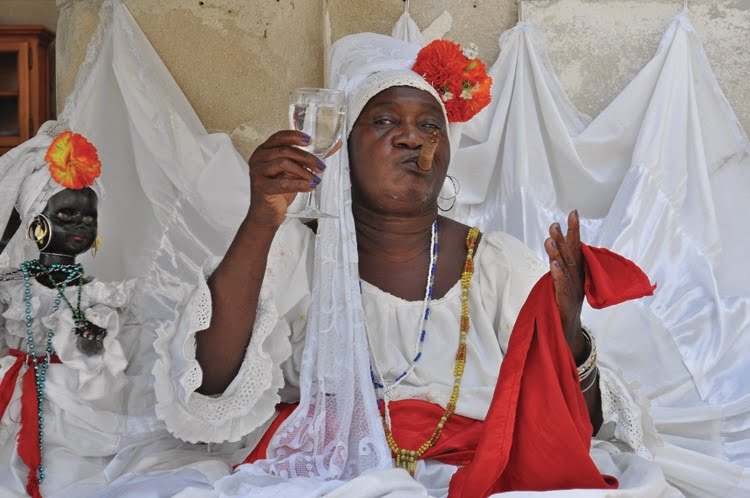 Santeria teaches that a universal force flows through all creation—commonly referred to as "God" in many traditions, but called "Olodumaré" in Santeria. This divine energy, present in everything, is known as "Ashé." Ashé is bestowed and administered by the Orixas, divine beings or "saints" who govern various life aspects and ensure each person's destiny, ordained from birth, unfolds as intended.
Elekes necklaces
In many African American religious traditions, it is common to use elekes necklaces as spiritual tools. They provide protection, ward off negative energies, and confer the blessings of the Saint they represent.It's important to set aside prejudice—there are no inherently good or bad religions, only good or bad people. If you believe in the power of the Saints, remember that the Yoruba religion has blended through syncretism with Catholic saints. So while Elekes are not exclusive to Umbanda or Santeria, or related beliefs, they can be respectfully used for protection and to attract positive energy. The elekes feature beads of different colors, each corresponding to the Saint to whom they are devoted.
5 Major Orixas
Obatalá
Syncretism: Corresponds to Nuestra Señora de las Mercedes (Our Lady of Mercy).Attributes: white soup tureen, white metal objects, tambourine feathers, parrots, cotton, and white eggs.
Necklace: beaded entirely in white.
Offerings: eight dishes of white rice cooked with milk, pomegranate, corn, millet, and other grains, as well as any white food without salt.
Eleggua
Eleggua holds the keys to destiny, opening and closing paths at will. He is both highly respected and feared since human fate rests in his hands. Known for a playful, mischievous, and unpredictable character, he is syncretized with the Divine Child of Atocha and also represents Saint Anthony of Padua. Serving this Orixa with faith and respect brings great favor.Syncretism: The Divine Child of Atocha, Saint Anthony of Padua.
Attributes: all kinds of toys.
Necklace: alternating single red and black beads.
Offerings: sweets, fruit, yellow rice, honey, and various treats.
Yemanyá
As the goddess of motherhood and the sea, Yemanyá is a supreme Orixa—mother and creator of life and the other orixás. Water, the essence of life, is vital to the Yoruba pantheon, and Yemanyá embodies this life-giving force. She attracts fertility and safeguards femininity.When immersed in water, she takes the form of a mermaid, protecting children and fishermen alike.
Syncretism: Virgin of Regla, Stella Maris.
Attributes: fish, boats, rudders, seahorses, sea snails, starfish, and all sea-related items.
Necklace: beads alternating in blue and clear or white, grouped in sevens.
Offerings: white and sky-colored flowers, perfumes, jewelry; she is very flirtatious and enjoys these gifts greatly.
Chango
Chango is the Orixa of justice, dance, and masculine strength. He represents the joy of living, the intensity of life, male beauty, passion, intelligence, and wealth. Among the Yoruba orixás, he is deeply beloved. Known as the king of warriors and god of fire and lightning, people turn to him for protection from enemies.Syncretism: Saint Barbara.
Attributes: sword, double-headed axe, and a wooden staff painted red with white decorations.
Necklace: alternating red and white beads, six of each, repeated until reaching 280 beads.
Offerings: roasted corn, pumpkin, sugar cane, bananas, and apples.
Oshun
Oshun is the goddess of rivers, love, and gold—the creator of wealth, beauty,and charm. Often likened to the Venus of the Yoruba pantheon, she protects marriages and embodies sweetness, love, gold, and the gentle flow of sweet waters.Symbolizing coquettishness, she is the one to approach for matters of finance and love.
Syncretism: Virgin of Charity of El Cobre.
Attributes: a sandalwood fan, five gold bracelets, a half moon, two oars, a star, the sun, and five tiny bells.
Necklace: beads in yellow and transparent or honey tones, alternating five beads each.
Offerings: shrimp, chard, onion, pepper, escarole, olive oil, dry white wine, eggs, honey, yellow rice, cornmeal, and all river fruits and sweets.
HOW TO CREATE AND CONSECRATE THE NECKLACES?
Once you've chosen which Saint (Orixa) to honor, prepare your altar with the following items:A bowl filled with holy water, brandy, honey, river and sea water, and magical herbs such as lavender, rue, bay leaves, and rosemary.
String the beads according to the pattern for your chosen Orixa. After completing the necklace, soak it in the prepared bowl. Hold the bowl with the offerings and respectfully ask for the Saint's protection. Then, use your right pinkie finger to lift the necklace out of the bowl and place it around your neck.
HOW TO CARE FOR AND PROTECT YOUR NECKLACE?
Avoid bathing while wearing your necklace.Do not wear the necklace during sexual activity.
When you're not wearing it, hang the necklace or wrap it in a white cloth, storing it in a special place that honors the particular Orixa it represents.
Once a year, soak your necklace on a white plate filled with coconut water and honey for 24 hours to renew its energy.
If your necklace breaks, don't panic—this means it absorbed negative energy and protected you. You will need to create a new one.
This concludes our article on Santeria Religion: how to make amulets and necklaces.Explore more articles on my site to discover additional insights about the Religion of Santeria, Umbandaand many other magical recipes and traditions.
Bibliography
- Budge, E. A. Wallis. Amulets and Superstitions. Oxford University Press, H. Milford, 1930, xxxix + 543 pp. Source.
- Johnston, Jay. Amulets in Magical Practice. Elements in Magic, Cambridge University Press, 2024, 80 pp. DOI 10.1017/9781108953412. Online ISBN 9781108953412. Cambridge Core. Source.
- Hall, Judy. The Crystal Bible Volume 2. Godsfield Press, 2009. ISBN 9781841813509. Source.
- Frater U∴D∴. Practical Sigil Magic: Creating Personal Symbols for Success. Revised ed., Llewellyn Publications, 2012, 134 pp. ISBN 9780738732329. Google Books.