What Is Witchcraft?
Hi, my name is Amira Asmodea, and welcome to my website. If you have come here wondering what witchcraft is, where it comes from, or what witches actually do, sit with me for a while. It is a larger question than it first appears.
Witchcraft has worn many faces throughout history. It has been feared, forbidden, whispered about, accused, inherited, rediscovered, and willingly embraced. For some, it is folk magic learned through family or tradition. For others, it is spellcraft, divination, candle work, herbs, spirits, protection, or ritual. And for many modern practitioners, the word witch is no longer an accusation at all, but a name they have consciously chosen for themselves.
There is no single book, religion, authority, or set of commandments that contains all witchcraft. To understand it, we must learn to distinguish old accusations from actual practices, folklore from history, religion from magic, and the witch of popular imagination from the many people who have carried magical traditions through the centuries.
INDEX
1 What is witchcraft?
2 Where does witchcraft come from?
3 Witchcraft beyond the idea of dark magic
4 White magic and black magic
4.1 White magic
4.2 Black magic
5 What is a witch?
6 Witchcraft and the Bible
7 Witchcraft and Christianity
8 Witchcraft across cultures
9 What witchcraft means today
But I would be wary of anyone who gives you a single definition and tells you that nothing else deserves the name.
Witchcraft has never been quite so obedient.
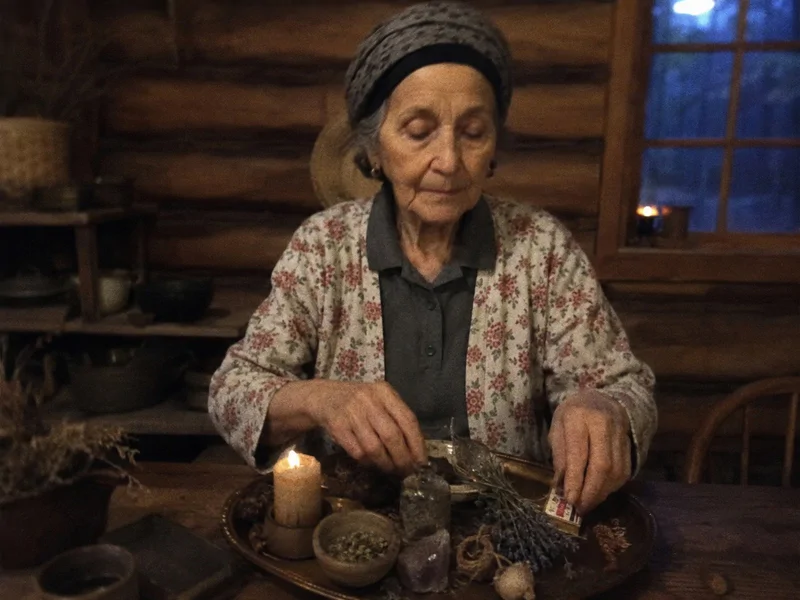
A woman carrying a family tradition of herbs and protective prayers may understand witchcraft very differently from a Wiccan standing within a ritual circle. A ceremonial magician may work with elaborate invocations and carefully prepared tools, while another witch may need little more than a candle, a bowl of water, a handful of salt, and a prayer spoken quietly at midnight.
There are solitary witches and covens. There are witches who worship deities and witches who do not. Some work closely with ancestors or spirits. Some belong to Pagan religions. Others consider their witchcraft a spiritual craft that exists beside religion rather than inside it.
This distinction matters especially when we speak about Wicca. Wicca is a modern Pagan religion in which magical practice and witchcraft often have an important place, but Wicca and witchcraft are not the same thing. Not every witch is Wiccan, and not every tradition of witchcraft follows Wiccan beliefs.
The word itself also carries old shadows.
For centuries, to be called a witch was often not to announce one's spiritual identity but to be accused by someone else. Witchcraft could mean malefic magic, heresy, secret dealings with spirits, curses, or even an imagined pact with evil forces. Those accusations tell us much about the fears of the societies that produced them, but they do not necessarily tell us what the accused person truly practiced—or whether that person practiced magic at all.
Today the word has changed once again. Many people openly and proudly call themselves witches, reclaiming a name that once brought terror to those who heard it whispered against them.
If you feel drawn toward the path yourself, I have written a separate guide on how to become a witch and begin your practice without trying to learn everything in a single night.
Protection is also one of the oldest concerns of magical practice. Those who fear that harmful intentions or witchcraft have been directed toward them have long turned to charms, sacred objects, cleansing rites, or a prayer against witchcraft. A threshold guarded with salt, a prayer spoken over water, or a candle kept burning for protection may appear simple, but simple things often carry very old traditions.
There was no morning in history when humanity suddenly discovered magic and began calling it witchcraft. Long before that particular word existed, people were already blessing homes, consulting diviners, making offerings, calling upon the dead, protecting children, preparing healing herbs, interpreting dreams, carrying amulets, cursing enemies, and asking unseen powers for assistance.
Ancient Mesopotamia, Egypt, Greece, and Rome all left us evidence of magical practices. Their temples, written spells, amulets, curse tablets, ritual instructions, and religious texts reveal worlds in which the boundary between what we now call religion and what we call magic was often far less clear than modern readers expect.
Yet we must be careful with names.
The English word witchcraft belongs to a particular European history. It would be a mistake to travel backward through time—or across the world—and simply call every healer, priest, shaman, sorcerer, diviner, spirit worker, or keeper of traditional knowledge a witch.
People deserve to be understood within the language and traditions of their own culture.
What does connect many old practices is a familiar human desire: to seek protection from what cannot be controlled, to understand what cannot be seen, and to influence the uncertain forces of life.
A mother tying a protective charm around a child's wrist, a farmer performing a rite before planting, a priest interpreting an omen, a healer gathering herbs before sunrise, and a magician inscribing words upon an amulet may belong to entirely different traditions. Yet each reveals something about humanity's ancient relationship with the sacred and unseen.
Magic and religion were also rarely perfect opposites. In many societies, protective charms, ancestor rites, offerings, divination, healing, sacred words, and spirit work existed comfortably inside ordinary religious life. A practice could be considered holy by one community and suspicious or forbidden by another.
History also brought traditions into contact with one another. The Americas are a particularly important example. Indigenous, European, and African religious and magical systems encountered each other under colonization, slavery, migration, violence, conversion, resistance, and cultural exchange. New forms of popular religion and magic emerged from these encounters, but they should never be flattened into one vague category called “witchcraft.”
Modern witchcraft carries echoes of very old practices, but it is not simply an untouched survival from antiquity. It has also been shaped by folklore, ceremonial magic, esoteric societies, spiritualism, nineteenth-century occult revivals, modern Paganism, twentieth-century witchcraft traditions, and generations of writers and practitioners who reimagined what it meant to be a witch.
The river is ancient, but many streams have entered it.
They hear of curses, black candles, strange objects left at doors, spells made against enemies, spirits invoked at night, or illnesses blamed upon an unseen hand. This image is deeply rooted in European folklore, religious conflict, demonology, and centuries of accusations against supposed witches.
But witchcraft has never belonged only to darkness.
Magical traditions contain rites of healing, fertility, protection, blessing, love, prosperity, divination, purification, justice, reconciliation, and spiritual guidance. People have used magic to defend a household as readily as to curse an enemy.
The same hand that knows how to tie a binding may also know how to untie one.
The same herb may be placed beside a bed for protection, brewed into a ritual wash, or burned upon an altar according to the tradition and intention of the practitioner.
Ancient Greece and Rome show this complexity very clearly. Divination could exist openly and hold religious or even political importance, while certain private forms of magic were feared, condemned, or restricted. Surviving texts reveal protective amulets, healing formulas, prayers, erotic magic, curse tablets, invocations, and rites addressed to gods, spirits, and other supernatural beings.
Later magical imagination drew heavily upon figures such as Hecate, Selene, and Diana. Hecate in particular became strongly associated in later folklore and occult traditions with witches, crossroads, ghosts, night, torches, and magic.
But here again, we should not mix everything into the same cauldron.
Ancient religion, literary myth, later folklore, ceremonial magic, and modern witchcraft influence one another, but they are not identical. Tales of witches flying through the night, becoming animals, gathering in secret assemblies, commanding storms, or slipping through locked doors belong largely to the realm of legend, accusation, and magical imagination.
And yet folklore matters. Stories repeated for centuries become part of the language through which people imagine the witch—even when the historical woman standing behind that image may have lived a very different life.
The simplest answer is that white magic is generally understood as magic directed toward healing, blessing, protection, purification, prosperity, reconciliation, and other beneficial ends, while black magic is usually associated with curses, domination, coercion, revenge, harm, and the deliberate manipulation of another person.
But magic is rarely tidy enough to remain inside two perfectly separated boxes.
Many modern witches no longer use these color labels at all. They prefer to speak about intention, ethics, consent, consequence, protection, coercion, or harmful and beneficial work.
There are good reasons for this.
Imagine a protection spell designed to drive away an enemy. Is it white because it protects the innocent person, or black because it acts aggressively against another?
Or consider a love spell. One practitioner may see it as a gentle attraction working, while another refuses any magic that attempts to influence a particular person's desires.
This is why the moral life of witchcraft cannot always be reduced to the color of a candle or the name given to a spell.
Intention matters. Consent matters. Consequences matter. And so does the tradition in which a witch has learned to understand her work.
The tools are often humble ones.
Salt at the threshold. Water prayed over before dawn. Rosemary burned through the rooms. A white candle lit beside the name of someone who is ill. A small charm carried in a pocket. An amulet above a doorway. A psalm recited seven times. A bowl of herbs placed beside a bed.
None of these objects is impressive by itself. Their meaning comes from tradition, intention, preparation, repetition, and the sacred relationship the practitioner establishes with them.
Religion and folk magic have also lived side by side for centuries. People have incorporated passages from the Bible, psalms, saints, prayers, sacred names, Qur'anic verses, holy water, blessed objects, and other religious materials into charms and household rites.
Those neat modern divisions between “religion” and “magic” often disappear when we look at what ordinary people actually did in their homes.
House cleansing is a beautiful example. One person may burn herbs and open every window. Another may bless water and carry it from room to room. Someone else may ring a bell, pray over salt, light candles, or place protective objects near the entrance.
The gestures differ, but the purpose is recognizable: to remove what has become heavy and remind the house that it is protected.
If you are interested in this practice, you can read my guide about cleansing a house from witchcraft or negative influences.
Traditional accounts of this kind of work often involve objects believed to create a connection with the intended person: photographs, clothing, hair, written names, footprints, bodily traces, personal possessions, dolls, knots, or other symbolic links.
This principle—the idea that something connected to a person can serve as a magical link to them—is very old and appears in many different magical traditions.
Still, witchcraft and black magic are not synonyms.
A witch may spend her entire life doing protection, divination, herbal work, healing rites, or devotional practices and never cast a curse. At the same time, cultures that contain forms of harmful or aggressive magic may not identify those practices with the modern Western idea of witchcraft at all.
When people believe they are suffering from harmful magic, they often become intensely attentive to what happens around them. A run of bad dreams, illness, broken objects, arguments, financial problems, strange discoveries near the doorway, or even ordinary coincidences may begin to feel connected.
I discuss traditional interpretations of these experiences in my article about symptoms associated with witchcraft and black magic.
There is wisdom in remaining calm here. Fear can become its own enchantment. Once a frightened person begins seeing a curse in everything, every creaking door becomes an omen and every unfortunate day becomes proof.
Protection should restore clarity, not destroy it.
Photographs and personal belongings have also played an important role in folk magic because they are treated as a connection to the person represented or touched by them. If you wish to understand this practice more deeply, you can read my guide to witchcraft with photographs.
Historically, a witch was often someone named by others.
A neighbor's cow stopped producing milk. A child became ill. Crops failed. A marriage collapsed. A storm destroyed a harvest. Someone died unexpectedly. When suffering had no obvious explanation, suspicion could settle upon an unpopular widow, a healer, a quarrelsome neighbor, a poor woman living alone, or sometimes almost anyone caught inside a web of local fear and accusation.
Many people prosecuted for witchcraft in Europe probably never thought of themselves as witches at all.
That is one of the most important things to remember when reading the history of witch trials. The “witch” described by an accusation and the human being standing before the court were not necessarily the same person.
Today, things are very different.
Many people consciously call themselves witches. They may use the word as a magical identity, a spiritual identity, a religious identity, or simply as the most honest description of what they practice.
Some witches belong to covens. Some practice alone for decades and never enter one. Some follow established traditions with initiations and teachings. Others build their craft slowly from folk customs, books, family practices, divination, herbal knowledge, devotional work, and personal experience.
I have always believed that the tools matter less than the depth with which they are understood. Owning fifty crystals does not make someone a witch. Neither does buying an expensive altar cloth or copying hundreds of spells from the internet.
A practice becomes meaningful when you begin to understand what you are doing, why you are doing it, and what each act means to you.
It is equally important not to call every spiritual practitioner a witch.
A shaman, medium, priest, healer, magician, diviner, sorcerer, and witch may all deal with things unseen, but these words emerge from different histories and cultures. They are not decorations that can simply be exchanged whenever they sound mysterious.
Mythology has given us some of the most enduring images of magical women. Medea and Circe became famous in Greek literature for potions, enchantment, transformation, and dangerous knowledge. Later European folklore gathered other images around the witch: moonlit flight, animal familiars, secret meetings, strange ointments, transformations, curses, and the witches' Sabbath.
These stories helped shape the witch we now recognize in paintings, fairy tales, films, and popular imagination.
But the woman in the story, the witch in the courtroom, and the modern witch sitting before her altar belong to different worlds.
We should not confuse them.
These passages have cast a very long shadow over the history of witchcraft in the Christian world.
Perhaps the most famous is Exodus 22:18, rendered in the King James Bible as: “Thou shalt not suffer a witch to live.”
Those words became terribly powerful in later Christian imagination, although the precise meaning of the original Hebrew term and its relationship to the much later European idea of the witch are subjects that require care.
Other passages, including Leviticus 20:27 and Deuteronomy 18:10–12, condemn forms of divination, spirit consultation, sorcery, and communication with the dead.
One of the Bible's most haunting magical stories appears in 1 Samuel 28.
King Saul, desperate and abandoned by the certainty he once possessed, seeks out a woman at Endor who is able to consult the dead. He asks her to summon the deceased prophet Samuel.
Later tradition often called her the Witch of Endor, although the biblical description is closer to what we might call a medium or necromancer.
The story is a dark and unforgettable one: a king enters the night in disguise, visits a forbidden woman, asks the dead for counsel, and receives not comfort but the prophecy of his own downfall.
It later became enormously important in Christian debates about spirits, necromancy, demons, and forbidden magic.
It is also worth remembering that Exodus belongs to the Hebrew Bible—or Old Testament in Christian terminology—not the New Testament.
The witch of later European demonology did not emerge fully formed from one biblical verse. That figure developed over centuries through translations, theology, church law, popular superstition, folklore, political conflict, and changing ideas about demons and magic.
It is tempting to imagine that Christians in every century held exactly the same beliefs about witches. They did not.
Christian authorities consistently condemned many forms of divination, sorcery, spirit consultation, and non-Christian ritual, but theologians did not always agree about what magical practitioners could actually do.
At different moments, church writers treated stories of magical night flights, transformations, and supernatural gatherings as illusions, superstitions, demonic deceptions, or literal crimes.
One of the stranger truths of witchcraft history is that some medieval teachings were more skeptical about witches' supposed supernatural adventures than many people imagine.
Later, especially toward the end of the medieval period and during the early modern centuries, European demonology developed a far more elaborate and frightening image.
The witch was increasingly imagined not merely as someone who cast a harmful spell, but as a servant or ally of the Devil.
From this literature came many features that still haunt the popular image of European witchcraft:
These images became terrifyingly influential.
But we must always remember what kind of sources they come from. Demonological books, interrogations, accusations, confessions obtained under pressure, religious polemics, and folklore tell us what people feared and imagined about witches. They do not necessarily provide a faithful description of what accused people truly practiced.
The great European witch persecutions reached their highest intensity in the early modern era rather than throughout the whole Middle Ages.
Thousands were prosecuted and executed. Women formed the majority of the accused in many regions, though the pattern varied considerably and men were prosecuted in significant numbers in certain places.
Behind every number was a person.
That is worth remembering whenever witch trials are reduced to picturesque stories of old villages, black cats, and broomsticks. For those who lived through them, the accusation of witchcraft could destroy a reputation, a family, and a life.
There are traditions of spirit workers, magical healers, people believed capable of causing illness, beings who transform into animals, diviners who perceive what others cannot see, and specialists called upon either to remove spiritual harm or inflict it.
The similarities are fascinating.
But similarity does not mean that every culture is describing the same thing.
This is especially important when we use the English word witchcraft to describe traditions from other parts of the world.
In Mexico and parts of Mesoamerica, for example, traditions surrounding the nahual or nagual include complex ideas concerning human beings, spiritual counterparts, animals, transformation, and supernatural power. These traditions have their own histories and should not simply be renamed European witchcraft.
In southern Chile and Argentina, Mapuche spiritual traditions likewise contain their own categories of healers, spiritual specialists, and feared magical figures. Their meanings belong to Mapuche cosmology and history.
Chilean folklore also tells of the Chonchón, a strange nocturnal being associated in some traditions with sorcery. Its imagery may remind an outsider of European tales of witches flying through the darkness, but resemblance should not erase origin.
A similar caution is necessary when speaking about Africa.
Africa is not one spiritual culture. It is a vast continent containing thousands of peoples, languages, religious systems, healing traditions, ancestor practices, divinatory systems, and beliefs concerning both beneficial and harmful supernatural power.
Some cultures have concepts that outsiders translate as “witchcraft.” Others distinguish sharply between healers, diviners, spirit mediums, sorcerers, priests, ancestors, and those believed to possess dangerous occult power.
When possible, I prefer to preserve the original name of a tradition rather than forcing everything into the same Western category.
There is something beautiful in discovering that people separated by oceans and centuries have asked similar questions about illness, fate, protection, spirits, and the unseen world.
But the answer given by each culture belongs first to that culture.
Walk through it and you will find candle witches, kitchen witches, folk practitioners, Wiccans, traditional witches, ceremonial magicians, spirit workers, hedge witches, devotional witches, solitary practitioners, covens, eclectic witches, and people who dislike every one of those labels.
One person may work almost entirely with herbs.
Another may spend years studying tarot and divination.
Someone else keeps a careful grimoire filled with planetary hours, candle colors, prayers, sigils, dreams, moon phases, recipes, protections, and observations gathered slowly over a lifetime.
For another witch, the altar is central. For someone else, the kitchen table is enough.
Some practices are religious and filled with devotion to gods, spirits, or ancestors. Others are more secular, symbolic, psychological, or personal. Many live somewhere between these neat definitions.
There is no universal witch's creed that all of them must recite.
What they often share is a belief that ritual matters—that symbols, intention, repetition, attention, sacred objects, words, and deliberate acts can become ways of entering into relationship with the world around us.
If you are a beginner, my advice is simple: do not begin by collecting spells.
Begin by learning.
A new witch is often tempted to save every ritual she encounters. One spell for money, seven for love, three for protection, another for the full moon, another for luck, another for an enemy—and soon she possesses a hundred instructions and understands almost none of them.
Do not be in such a hurry.
Learn why salt is placed at a threshold.
Learn why certain herbs appear again and again in protection work.
Learn what a candle represents before worrying about buying twenty colors.
Learn how divination differs from spellcraft. Learn how to cleanse an object. Learn how to keep notes. Learn which traditions belong to cultures that should be approached with knowledge and respect rather than treated as decorations.
Keep a grimoire if you wish. Write down what you do, what you observe, what succeeds, what fails, and what you later discover you misunderstood.
A grimoire filled over ten years is worth far more than one copied from the internet in an afternoon.
And read.
Read old sources when you can. Read modern practitioners. Read folklore. Read history. Read people who disagree with each other.
The deeper you go into witchcraft, the more often you will discover that things presented as “ancient traditions” are sometimes quite modern, while humble practices dismissed as superstition may possess histories far older than expected.
If you are only beginning, my guide on how to become a witch is a natural place to continue. From there, you can explore protection, candle magic, herbs, divination, spellcraft, ritual work, and the many other branches of the craft one at a time.
Witchcraft has never meant only one thing.
It has been an accusation whispered against a neighbor. A crime written into law. A fear preached from a pulpit. A figure from myth. A character in folklore. A secret practice passed quietly through families. A religion for some, a craft for others, and a name reclaimed by people who once would have feared hearing it spoken aloud.
Perhaps that is why the witch remains with us.
She changes with every age, but she never quite disappears.
And behind all the stories, fears, rituals, candles, herbs, spirits, and legends remains the same old human desire: to look beyond what is visible and ask whether the world contains more than what the eye alone can see.
Witchcraft has worn many faces throughout history. It has been feared, forbidden, whispered about, accused, inherited, rediscovered, and willingly embraced. For some, it is folk magic learned through family or tradition. For others, it is spellcraft, divination, candle work, herbs, spirits, protection, or ritual. And for many modern practitioners, the word witch is no longer an accusation at all, but a name they have consciously chosen for themselves.
There is no single book, religion, authority, or set of commandments that contains all witchcraft. To understand it, we must learn to distinguish old accusations from actual practices, folklore from history, religion from magic, and the witch of popular imagination from the many people who have carried magical traditions through the centuries.
 |
| Real Witches Coven |
INDEX
1 What is witchcraft?
2 Where does witchcraft come from?
3 Witchcraft beyond the idea of dark magic
4 White magic and black magic
4.1 White magic
4.2 Black magic
5 What is a witch?
6 Witchcraft and the Bible
7 Witchcraft and Christianity
8 Witchcraft across cultures
9 What witchcraft means today
What is witchcraft?
At its broadest, witchcraft is the practice of magic through ritual, spells, charms, divination, herbs, candles, sacred objects, spirit work, symbolic actions, and other methods intended to influence circumstances or bring about spiritual and personal change.But I would be wary of anyone who gives you a single definition and tells you that nothing else deserves the name.
Witchcraft has never been quite so obedient.
A woman carrying a family tradition of herbs and protective prayers may understand witchcraft very differently from a Wiccan standing within a ritual circle. A ceremonial magician may work with elaborate invocations and carefully prepared tools, while another witch may need little more than a candle, a bowl of water, a handful of salt, and a prayer spoken quietly at midnight.
There are solitary witches and covens. There are witches who worship deities and witches who do not. Some work closely with ancestors or spirits. Some belong to Pagan religions. Others consider their witchcraft a spiritual craft that exists beside religion rather than inside it.
This distinction matters especially when we speak about Wicca. Wicca is a modern Pagan religion in which magical practice and witchcraft often have an important place, but Wicca and witchcraft are not the same thing. Not every witch is Wiccan, and not every tradition of witchcraft follows Wiccan beliefs.
The word itself also carries old shadows.
For centuries, to be called a witch was often not to announce one's spiritual identity but to be accused by someone else. Witchcraft could mean malefic magic, heresy, secret dealings with spirits, curses, or even an imagined pact with evil forces. Those accusations tell us much about the fears of the societies that produced them, but they do not necessarily tell us what the accused person truly practiced—or whether that person practiced magic at all.
Today the word has changed once again. Many people openly and proudly call themselves witches, reclaiming a name that once brought terror to those who heard it whispered against them.
If you feel drawn toward the path yourself, I have written a separate guide on how to become a witch and begin your practice without trying to learn everything in a single night.
Protection is also one of the oldest concerns of magical practice. Those who fear that harmful intentions or witchcraft have been directed toward them have long turned to charms, sacred objects, cleansing rites, or a prayer against witchcraft. A threshold guarded with salt, a prayer spoken over water, or a candle kept burning for protection may appear simple, but simple things often carry very old traditions.
Where does witchcraft come from?
Witchcraft has no single birthplace.There was no morning in history when humanity suddenly discovered magic and began calling it witchcraft. Long before that particular word existed, people were already blessing homes, consulting diviners, making offerings, calling upon the dead, protecting children, preparing healing herbs, interpreting dreams, carrying amulets, cursing enemies, and asking unseen powers for assistance.
Ancient Mesopotamia, Egypt, Greece, and Rome all left us evidence of magical practices. Their temples, written spells, amulets, curse tablets, ritual instructions, and religious texts reveal worlds in which the boundary between what we now call religion and what we call magic was often far less clear than modern readers expect.
Yet we must be careful with names.
The English word witchcraft belongs to a particular European history. It would be a mistake to travel backward through time—or across the world—and simply call every healer, priest, shaman, sorcerer, diviner, spirit worker, or keeper of traditional knowledge a witch.
People deserve to be understood within the language and traditions of their own culture.
What does connect many old practices is a familiar human desire: to seek protection from what cannot be controlled, to understand what cannot be seen, and to influence the uncertain forces of life.
A mother tying a protective charm around a child's wrist, a farmer performing a rite before planting, a priest interpreting an omen, a healer gathering herbs before sunrise, and a magician inscribing words upon an amulet may belong to entirely different traditions. Yet each reveals something about humanity's ancient relationship with the sacred and unseen.
Magic and religion were also rarely perfect opposites. In many societies, protective charms, ancestor rites, offerings, divination, healing, sacred words, and spirit work existed comfortably inside ordinary religious life. A practice could be considered holy by one community and suspicious or forbidden by another.
History also brought traditions into contact with one another. The Americas are a particularly important example. Indigenous, European, and African religious and magical systems encountered each other under colonization, slavery, migration, violence, conversion, resistance, and cultural exchange. New forms of popular religion and magic emerged from these encounters, but they should never be flattened into one vague category called “witchcraft.”
Modern witchcraft carries echoes of very old practices, but it is not simply an untouched survival from antiquity. It has also been shaped by folklore, ceremonial magic, esoteric societies, spiritualism, nineteenth-century occult revivals, modern Paganism, twentieth-century witchcraft traditions, and generations of writers and practitioners who reimagined what it meant to be a witch.
The river is ancient, but many streams have entered it.
Witchcraft beyond the idea of dark magic
Many people encounter witchcraft first through fear.They hear of curses, black candles, strange objects left at doors, spells made against enemies, spirits invoked at night, or illnesses blamed upon an unseen hand. This image is deeply rooted in European folklore, religious conflict, demonology, and centuries of accusations against supposed witches.
But witchcraft has never belonged only to darkness.
Magical traditions contain rites of healing, fertility, protection, blessing, love, prosperity, divination, purification, justice, reconciliation, and spiritual guidance. People have used magic to defend a household as readily as to curse an enemy.
The same hand that knows how to tie a binding may also know how to untie one.
The same herb may be placed beside a bed for protection, brewed into a ritual wash, or burned upon an altar according to the tradition and intention of the practitioner.
Ancient Greece and Rome show this complexity very clearly. Divination could exist openly and hold religious or even political importance, while certain private forms of magic were feared, condemned, or restricted. Surviving texts reveal protective amulets, healing formulas, prayers, erotic magic, curse tablets, invocations, and rites addressed to gods, spirits, and other supernatural beings.
Later magical imagination drew heavily upon figures such as Hecate, Selene, and Diana. Hecate in particular became strongly associated in later folklore and occult traditions with witches, crossroads, ghosts, night, torches, and magic.
But here again, we should not mix everything into the same cauldron.
Ancient religion, literary myth, later folklore, ceremonial magic, and modern witchcraft influence one another, but they are not identical. Tales of witches flying through the night, becoming animals, gathering in secret assemblies, commanding storms, or slipping through locked doors belong largely to the realm of legend, accusation, and magical imagination.
And yet folklore matters. Stories repeated for centuries become part of the language through which people imagine the witch—even when the historical woman standing behind that image may have lived a very different life.
White magic and black magic
People often ask me about the difference between white magic and black magic.The simplest answer is that white magic is generally understood as magic directed toward healing, blessing, protection, purification, prosperity, reconciliation, and other beneficial ends, while black magic is usually associated with curses, domination, coercion, revenge, harm, and the deliberate manipulation of another person.
But magic is rarely tidy enough to remain inside two perfectly separated boxes.
Many modern witches no longer use these color labels at all. They prefer to speak about intention, ethics, consent, consequence, protection, coercion, or harmful and beneficial work.
There are good reasons for this.
Imagine a protection spell designed to drive away an enemy. Is it white because it protects the innocent person, or black because it acts aggressively against another?
Or consider a love spell. One practitioner may see it as a gentle attraction working, while another refuses any magic that attempts to influence a particular person's desires.
This is why the moral life of witchcraft cannot always be reduced to the color of a candle or the name given to a spell.
Intention matters. Consent matters. Consequences matter. And so does the tradition in which a witch has learned to understand her work.
White magic
What is commonly called white magic includes protection, cleansing, blessing, healing, prosperity work, peaceful love magic, uncrossing, purification, and rituals intended to restore harmony.The tools are often humble ones.
Salt at the threshold. Water prayed over before dawn. Rosemary burned through the rooms. A white candle lit beside the name of someone who is ill. A small charm carried in a pocket. An amulet above a doorway. A psalm recited seven times. A bowl of herbs placed beside a bed.
None of these objects is impressive by itself. Their meaning comes from tradition, intention, preparation, repetition, and the sacred relationship the practitioner establishes with them.
Religion and folk magic have also lived side by side for centuries. People have incorporated passages from the Bible, psalms, saints, prayers, sacred names, Qur'anic verses, holy water, blessed objects, and other religious materials into charms and household rites.
Those neat modern divisions between “religion” and “magic” often disappear when we look at what ordinary people actually did in their homes.
House cleansing is a beautiful example. One person may burn herbs and open every window. Another may bless water and carry it from room to room. Someone else may ring a bell, pray over salt, light candles, or place protective objects near the entrance.
The gestures differ, but the purpose is recognizable: to remove what has become heavy and remind the house that it is protected.
If you are interested in this practice, you can read my guide about cleansing a house from witchcraft or negative influences.
Black magic
Black magic is generally associated with deliberate harm or coercion: curses, hexes, revenge work, domination, bindings intended to control another person, or rituals meant to interfere with another person's freedom or well-being.Traditional accounts of this kind of work often involve objects believed to create a connection with the intended person: photographs, clothing, hair, written names, footprints, bodily traces, personal possessions, dolls, knots, or other symbolic links.
This principle—the idea that something connected to a person can serve as a magical link to them—is very old and appears in many different magical traditions.
Still, witchcraft and black magic are not synonyms.
A witch may spend her entire life doing protection, divination, herbal work, healing rites, or devotional practices and never cast a curse. At the same time, cultures that contain forms of harmful or aggressive magic may not identify those practices with the modern Western idea of witchcraft at all.
When people believe they are suffering from harmful magic, they often become intensely attentive to what happens around them. A run of bad dreams, illness, broken objects, arguments, financial problems, strange discoveries near the doorway, or even ordinary coincidences may begin to feel connected.
I discuss traditional interpretations of these experiences in my article about symptoms associated with witchcraft and black magic.
There is wisdom in remaining calm here. Fear can become its own enchantment. Once a frightened person begins seeing a curse in everything, every creaking door becomes an omen and every unfortunate day becomes proof.
Protection should restore clarity, not destroy it.
Photographs and personal belongings have also played an important role in folk magic because they are treated as a connection to the person represented or touched by them. If you wish to understand this practice more deeply, you can read my guide to witchcraft with photographs.
What is a witch?
This question has two very different answers, depending on whether we are speaking about the past or the present.Historically, a witch was often someone named by others.
A neighbor's cow stopped producing milk. A child became ill. Crops failed. A marriage collapsed. A storm destroyed a harvest. Someone died unexpectedly. When suffering had no obvious explanation, suspicion could settle upon an unpopular widow, a healer, a quarrelsome neighbor, a poor woman living alone, or sometimes almost anyone caught inside a web of local fear and accusation.
Many people prosecuted for witchcraft in Europe probably never thought of themselves as witches at all.
That is one of the most important things to remember when reading the history of witch trials. The “witch” described by an accusation and the human being standing before the court were not necessarily the same person.
Today, things are very different.
Many people consciously call themselves witches. They may use the word as a magical identity, a spiritual identity, a religious identity, or simply as the most honest description of what they practice.
Some witches belong to covens. Some practice alone for decades and never enter one. Some follow established traditions with initiations and teachings. Others build their craft slowly from folk customs, books, family practices, divination, herbal knowledge, devotional work, and personal experience.
I have always believed that the tools matter less than the depth with which they are understood. Owning fifty crystals does not make someone a witch. Neither does buying an expensive altar cloth or copying hundreds of spells from the internet.
A practice becomes meaningful when you begin to understand what you are doing, why you are doing it, and what each act means to you.
It is equally important not to call every spiritual practitioner a witch.
A shaman, medium, priest, healer, magician, diviner, sorcerer, and witch may all deal with things unseen, but these words emerge from different histories and cultures. They are not decorations that can simply be exchanged whenever they sound mysterious.
Mythology has given us some of the most enduring images of magical women. Medea and Circe became famous in Greek literature for potions, enchantment, transformation, and dangerous knowledge. Later European folklore gathered other images around the witch: moonlit flight, animal familiars, secret meetings, strange ointments, transformations, curses, and the witches' Sabbath.
These stories helped shape the witch we now recognize in paintings, fairy tales, films, and popular imagination.
But the woman in the story, the witch in the courtroom, and the modern witch sitting before her altar belong to different worlds.
We should not confuse them.
Witchcraft and the Bible
The Bible contains several passages condemning practices that English translations have rendered with words such as witchcraft, sorcery, divination, necromancy, magic, or consultation with spirits.These passages have cast a very long shadow over the history of witchcraft in the Christian world.
Perhaps the most famous is Exodus 22:18, rendered in the King James Bible as: “Thou shalt not suffer a witch to live.”
Those words became terribly powerful in later Christian imagination, although the precise meaning of the original Hebrew term and its relationship to the much later European idea of the witch are subjects that require care.
Other passages, including Leviticus 20:27 and Deuteronomy 18:10–12, condemn forms of divination, spirit consultation, sorcery, and communication with the dead.
One of the Bible's most haunting magical stories appears in 1 Samuel 28.
King Saul, desperate and abandoned by the certainty he once possessed, seeks out a woman at Endor who is able to consult the dead. He asks her to summon the deceased prophet Samuel.
Later tradition often called her the Witch of Endor, although the biblical description is closer to what we might call a medium or necromancer.
The story is a dark and unforgettable one: a king enters the night in disguise, visits a forbidden woman, asks the dead for counsel, and receives not comfort but the prophecy of his own downfall.
It later became enormously important in Christian debates about spirits, necromancy, demons, and forbidden magic.
It is also worth remembering that Exodus belongs to the Hebrew Bible—or Old Testament in Christian terminology—not the New Testament.
The witch of later European demonology did not emerge fully formed from one biblical verse. That figure developed over centuries through translations, theology, church law, popular superstition, folklore, political conflict, and changing ideas about demons and magic.
Witchcraft and Christianity
The relationship between Christianity and witchcraft is long, complicated, and often tragic.It is tempting to imagine that Christians in every century held exactly the same beliefs about witches. They did not.
Christian authorities consistently condemned many forms of divination, sorcery, spirit consultation, and non-Christian ritual, but theologians did not always agree about what magical practitioners could actually do.
At different moments, church writers treated stories of magical night flights, transformations, and supernatural gatherings as illusions, superstitions, demonic deceptions, or literal crimes.
One of the stranger truths of witchcraft history is that some medieval teachings were more skeptical about witches' supposed supernatural adventures than many people imagine.
Later, especially toward the end of the medieval period and during the early modern centuries, European demonology developed a far more elaborate and frightening image.
The witch was increasingly imagined not merely as someone who cast a harmful spell, but as a servant or ally of the Devil.
From this literature came many features that still haunt the popular image of European witchcraft:
- Night flight or supernatural transportation.
- Secret gatherings traditionally called sabbaths.
- Pacts or encounters with the Devil or demons.
- The use of harmful magic or curses.
- Animal familiars or supernatural assistants.
- Sexual or ritual encounters described in demonological literature.
But we must always remember what kind of sources they come from. Demonological books, interrogations, accusations, confessions obtained under pressure, religious polemics, and folklore tell us what people feared and imagined about witches. They do not necessarily provide a faithful description of what accused people truly practiced.
The great European witch persecutions reached their highest intensity in the early modern era rather than throughout the whole Middle Ages.
Thousands were prosecuted and executed. Women formed the majority of the accused in many regions, though the pattern varied considerably and men were prosecuted in significant numbers in certain places.
Behind every number was a person.
That is worth remembering whenever witch trials are reduced to picturesque stories of old villages, black cats, and broomsticks. For those who lived through them, the accusation of witchcraft could destroy a reputation, a family, and a life.
Witchcraft across cultures
Wherever human beings have lived, there have been stories about hidden powers.There are traditions of spirit workers, magical healers, people believed capable of causing illness, beings who transform into animals, diviners who perceive what others cannot see, and specialists called upon either to remove spiritual harm or inflict it.
The similarities are fascinating.
But similarity does not mean that every culture is describing the same thing.
This is especially important when we use the English word witchcraft to describe traditions from other parts of the world.
In Mexico and parts of Mesoamerica, for example, traditions surrounding the nahual or nagual include complex ideas concerning human beings, spiritual counterparts, animals, transformation, and supernatural power. These traditions have their own histories and should not simply be renamed European witchcraft.
In southern Chile and Argentina, Mapuche spiritual traditions likewise contain their own categories of healers, spiritual specialists, and feared magical figures. Their meanings belong to Mapuche cosmology and history.
Chilean folklore also tells of the Chonchón, a strange nocturnal being associated in some traditions with sorcery. Its imagery may remind an outsider of European tales of witches flying through the darkness, but resemblance should not erase origin.
A similar caution is necessary when speaking about Africa.
Africa is not one spiritual culture. It is a vast continent containing thousands of peoples, languages, religious systems, healing traditions, ancestor practices, divinatory systems, and beliefs concerning both beneficial and harmful supernatural power.
Some cultures have concepts that outsiders translate as “witchcraft.” Others distinguish sharply between healers, diviners, spirit mediums, sorcerers, priests, ancestors, and those believed to possess dangerous occult power.
When possible, I prefer to preserve the original name of a tradition rather than forcing everything into the same Western category.
There is something beautiful in discovering that people separated by oceans and centuries have asked similar questions about illness, fate, protection, spirits, and the unseen world.
But the answer given by each culture belongs first to that culture.
What witchcraft means today
Modern witchcraft is a vast and sometimes bewildering garden.Walk through it and you will find candle witches, kitchen witches, folk practitioners, Wiccans, traditional witches, ceremonial magicians, spirit workers, hedge witches, devotional witches, solitary practitioners, covens, eclectic witches, and people who dislike every one of those labels.
One person may work almost entirely with herbs.
Another may spend years studying tarot and divination.
Someone else keeps a careful grimoire filled with planetary hours, candle colors, prayers, sigils, dreams, moon phases, recipes, protections, and observations gathered slowly over a lifetime.
For another witch, the altar is central. For someone else, the kitchen table is enough.
Some practices are religious and filled with devotion to gods, spirits, or ancestors. Others are more secular, symbolic, psychological, or personal. Many live somewhere between these neat definitions.
There is no universal witch's creed that all of them must recite.
What they often share is a belief that ritual matters—that symbols, intention, repetition, attention, sacred objects, words, and deliberate acts can become ways of entering into relationship with the world around us.
If you are a beginner, my advice is simple: do not begin by collecting spells.
Begin by learning.
A new witch is often tempted to save every ritual she encounters. One spell for money, seven for love, three for protection, another for the full moon, another for luck, another for an enemy—and soon she possesses a hundred instructions and understands almost none of them.
Do not be in such a hurry.
Learn why salt is placed at a threshold.
Learn why certain herbs appear again and again in protection work.
Learn what a candle represents before worrying about buying twenty colors.
Learn how divination differs from spellcraft. Learn how to cleanse an object. Learn how to keep notes. Learn which traditions belong to cultures that should be approached with knowledge and respect rather than treated as decorations.
Keep a grimoire if you wish. Write down what you do, what you observe, what succeeds, what fails, and what you later discover you misunderstood.
A grimoire filled over ten years is worth far more than one copied from the internet in an afternoon.
And read.
Read old sources when you can. Read modern practitioners. Read folklore. Read history. Read people who disagree with each other.
The deeper you go into witchcraft, the more often you will discover that things presented as “ancient traditions” are sometimes quite modern, while humble practices dismissed as superstition may possess histories far older than expected.
If you are only beginning, my guide on how to become a witch is a natural place to continue. From there, you can explore protection, candle magic, herbs, divination, spellcraft, ritual work, and the many other branches of the craft one at a time.
Witchcraft has never meant only one thing.
It has been an accusation whispered against a neighbor. A crime written into law. A fear preached from a pulpit. A figure from myth. A character in folklore. A secret practice passed quietly through families. A religion for some, a craft for others, and a name reclaimed by people who once would have feared hearing it spoken aloud.
Perhaps that is why the witch remains with us.
She changes with every age, but she never quite disappears.
And behind all the stories, fears, rituals, candles, herbs, spirits, and legends remains the same old human desire: to look beyond what is visible and ask whether the world contains more than what the eye alone can see.
Bibliography
- Doreen Valiente. An ABC of Witchcraft Past and Present. Robert Hale, an imprint of The Crowood Press, 1999. ISBN 9780719826917.
- Buckland, Raymond. Buckland's Complete Book of Witchcraft. Llewellyn Publications, 1986. ISBN 9780875420509. Source.
- Gerald Gardner. The Meaning of Witchcraft. Aquarian Press, 1982. ISBN 1950506789. Source.
- Gardner, Gerald. Witchcraft Today. Rider & Company, 1954. Source.
- Zambelli, Paola. White Magic, Black Magic in the European Renaissance: From Ficino, Pico, Della Porta to Trithemius, Agrippa, Bruno. Studies in Medieval and Reformation Traditions, vol. 125, Brill, 2007, x + 282 pp. ISBN 978-90-04-16098-9. Cambridge Core. Google Books.
- Scott Cunningham. Wicca: a guide for the solitary practitioner. WICCA A GUIDE FOR THE SOLITARY PRACTITIONER SCOTT CUNNINGHAM Llewellyn Publications, 1993.
- Knight, Gareth. A History of White Magic. Illustrated reprint, Skylight Press, 2011, 207 pp. ISBN 9781908011046. Google Books.