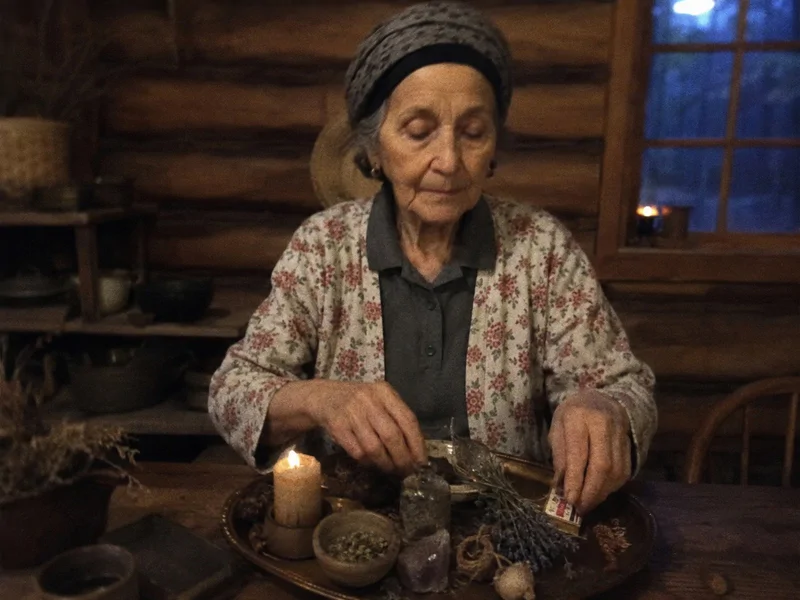
How to cleanse the house of witchcraft
Greetings, dear reader. I am Amira Asmodea, and today I would like to speak with you about something that should never be approached in haste or fear: how to cleanse a house of witchcraft.
Over the years, many people have written to me about this. They tell me that their home no longer feels as it once did. The rooms seem heavier. Arguments arise without clear reason. Sleep becomes restless, plants weaken, animals behave strangely, or there is simply the persistent feeling that something unwelcome has crossed the threshold.
A house is more than walls, doors, and furniture. It gathers the traces of those who live within it: their joys, sorrows, anger, love, illnesses, quarrels, visitors, memories, and spiritual influences. Most of these traces fade naturally. Others linger.
And sometimes, whether through envy, ill intention, a curse, a deliberate working, or another form of harmful influence, the atmosphere of a home can become burdened.
To cleanse a house of witchcraft is to break those unwanted ties, remove what should not remain, and restore protection to the place where you sleep, eat, dream, and gather with those you love. This work should not be done with panic or anger. Fear gives too much importance to darkness. A cleansing is an act of order: you are simply reminding your home what belongs there—and what does not.
Just as dust gathers in corners, so too can resentment, grief, envy, fear, and ill will gather in the atmosphere of a place. Some of this comes from the people living there. Some may arrive with visitors. And some influences seem to cling to a home from outside.
One of the oldest examples is what many traditions call the evil eye: the harm born from envy, jealousy, resentment, or an intense gaze. It is not always sent consciously. A person may leave your house having admired what you possess while secretly resenting it, and that bitterness may remain like smoke after a candle has been extinguished.
Children and animals often seem to notice such changes before adults do. A pet may refuse to enter a certain room, stare repeatedly toward an empty corner, or become restless at night. Children may suddenly sleep badly or complain that a familiar place feels frightening. I do not say that every strange behavior is a sign of witchcraft—ordinary causes should never be ignored—but when several signs appear together, I pay attention.
There are also cases in which the influence feels more deliberate: a binding, a curse, an object left near the property, or a working intended to disturb peace within the household. When this is suspected, merely opening the windows or burning a little incense may not feel sufficient. A more deliberate cleansing can help restore the boundaries of the home.

You are not declaring war upon unseen forces. You are cleansing your home, closing its doors to what is harmful, and restoring peace within its walls.
Intention matters greatly in this kind of work. Your thoughts do not need to be dramatic, but they should be steady. Before touching any of the ritual objects, stand quietly for a moment and form a simple purpose in your mind:
What does not belong in this house must leave. What protects this house may remain.
The ritual below combines several old protective elements: salt, water, fire, garlic, sacred imagery, and the symbolic cutting power of scissors. Each has its own purpose, and together they form a simple but powerful household cleansing.
Add the coarse salt gradually, stirring the water as you do so. Do not hurry. As the salt enters the water, hold in your mind the idea that everything harmful is being drawn out of the house and deprived of its hold.
When the salt has dissolved as much as it naturally will, place the scissors open at the bottom of the bucket.
The scissors must remain open. Their purpose is symbolic but important: they represent the severing of bindings, attachments, ill intentions, and spiritual cords that have no rightful place in your home.
Now place the bucket upon the photograph or sacred image of your chosen being of light.
Around the bucket, arrange the white candles and the cloves of garlic.
You have now created a small cleansing altar. Water receives and carries. Salt purifies and protects. Fire illuminates and transforms. Garlic guards. The scissors cut. And the sacred image places the entire working beneath the protection of the spiritual presence you trust.
Leave this arrangement undisturbed for one full day.
During that time, try to keep the area peaceful. Avoid unnecessary arguments near the ritual. You need not spend the day staring at the altar. Simply allow the elements to remain together and do their work.
On the following day, light the white candles.
Then speak a prayer, invocation, or affirmation to your chosen being of light. If you already have a traditional prayer, use it. If not, speak plainly from the heart. Ask that your home be cleansed, that harmful influences be removed, and that peace and protection return beneath your roof.
Repeat the prayer seven times.
Seven is a traditional number in many magical and devotional practices, associated with completion, protection, sacred order, and the closing of a spiritual cycle.
As the candles burn, take a small cup and collect some of the salt water from the bucket.
Begin at the entrance of the house.
Sprinkle a little of the water near the doorway, then continue slowly through the rooms. I prefer to move with calm purpose rather than rushing from place to place. Pay particular attention to thresholds, windows, dark corners, corridors, and rooms where arguments, nightmares, illness, or uneasiness have been strongest.
Think of this almost as a sacred christening of the house.
You are washing away what has accumulated and marking the boundaries once more.
As you sprinkle the water, you may repeat a simple phrase such as:
“Let all harm depart from this place. Let peace remain.”
There is no need to shout. The quiet voice is often the stronger one.
When you have finished cleansing the rooms, sprinkle a little of the blessed water upon yourself.
You may also lightly sprinkle the other members of the household if they are comfortable participating. In this part of the ritual, the water is used not only to cleanse but to establish a protective boundary around each person.
If there is water remaining afterward, do not pour it back into an ordinary household container.
Take it outside and pour it directly onto natural earth, preferably away from the main entrance. A garden, an uncultivated patch of soil, or the base of a tree may be used. Let the earth receive what has been removed and transform it.
Once the ritual is complete, wash the bucket and scissors thoroughly before using them for anything else. If you keep ritual tools separately, return the scissors to their usual place.
But just as a house needs to be swept and aired, its spiritual atmosphere benefits from occasional care.
Some people perform a deeper cleansing monthly. Others do so with the changing seasons, after an illness, after a serious argument, when an unwelcome visitor has left, or whenever the character of the home seems to have changed.
Between deeper cleansings, small habits are usually enough.
Open the windows whenever possible and allow old air to leave. Sunlight itself can change the feeling of a room. Burn rosemary or another herb traditionally used in your own practice. Keep entrances clean. Do not allow broken objects, dead plants, or forgotten clutter to accumulate indefinitely around doors and passageways.
You may also keep a small bowl of coarse salt near the entrance for protection, replacing it from time to time. I have always liked simple guardians better than elaborate ones. A quiet object placed with purpose often serves the home faithfully.
Most importantly, pay attention to what is spoken beneath your roof.
No ritual can preserve peace in a house where cruelty is deliberately renewed every day. Harsh words, resentment, humiliation, and constant hostility leave their own traces. Magic does not excuse us from caring for the human life of the home.
A peaceful house is built from both visible and invisible things.
Treat its thresholds with respect. Keep its rooms alive. Protect those who sleep beneath its roof. And when the atmosphere grows heavy, do not surrender immediately to fear.
Cleanse it.
Open the windows.
Light a candle.
Put things back in their proper place.
Sometimes a home needs only to be reminded that it is yours.
I hope this ritual gives you a clear way to cleanse your house of witchcraft and restore the feeling of safety that every home should possess.
If you have questions or need a prayer suited to your particular situation, you may write to me at amiraasmodea@hotmail.com.
Thank you for sitting with me for a while.
May your doors remain guarded, your rooms peaceful, and every candle you light within them burn beneath a kinder shadow.
Over the years, many people have written to me about this. They tell me that their home no longer feels as it once did. The rooms seem heavier. Arguments arise without clear reason. Sleep becomes restless, plants weaken, animals behave strangely, or there is simply the persistent feeling that something unwelcome has crossed the threshold.
A house is more than walls, doors, and furniture. It gathers the traces of those who live within it: their joys, sorrows, anger, love, illnesses, quarrels, visitors, memories, and spiritual influences. Most of these traces fade naturally. Others linger.
And sometimes, whether through envy, ill intention, a curse, a deliberate working, or another form of harmful influence, the atmosphere of a home can become burdened.
To cleanse a house of witchcraft is to break those unwanted ties, remove what should not remain, and restore protection to the place where you sleep, eat, dream, and gather with those you love. This work should not be done with panic or anger. Fear gives too much importance to darkness. A cleansing is an act of order: you are simply reminding your home what belongs there—and what does not.
Why cleansing your house matters
In many traditions of witchcraft and folk magic, the home is treated almost as a living vessel. It receives what enters through its doors, but it also absorbs what is spoken, felt, and repeated beneath its roof.Just as dust gathers in corners, so too can resentment, grief, envy, fear, and ill will gather in the atmosphere of a place. Some of this comes from the people living there. Some may arrive with visitors. And some influences seem to cling to a home from outside.
One of the oldest examples is what many traditions call the evil eye: the harm born from envy, jealousy, resentment, or an intense gaze. It is not always sent consciously. A person may leave your house having admired what you possess while secretly resenting it, and that bitterness may remain like smoke after a candle has been extinguished.
Children and animals often seem to notice such changes before adults do. A pet may refuse to enter a certain room, stare repeatedly toward an empty corner, or become restless at night. Children may suddenly sleep badly or complain that a familiar place feels frightening. I do not say that every strange behavior is a sign of witchcraft—ordinary causes should never be ignored—but when several signs appear together, I pay attention.
There are also cases in which the influence feels more deliberate: a binding, a curse, an object left near the property, or a working intended to disturb peace within the household. When this is suspected, merely opening the windows or burning a little incense may not feel sufficient. A more deliberate cleansing can help restore the boundaries of the home.

Steps to cleanse your home of witchcraft
Before you begin, decide clearly what you are doing.You are not declaring war upon unseen forces. You are cleansing your home, closing its doors to what is harmful, and restoring peace within its walls.
Intention matters greatly in this kind of work. Your thoughts do not need to be dramatic, but they should be steady. Before touching any of the ritual objects, stand quietly for a moment and form a simple purpose in your mind:
What does not belong in this house must leave. What protects this house may remain.
The ritual below combines several old protective elements: salt, water, fire, garlic, sacred imagery, and the symbolic cutting power of scissors. Each has its own purpose, and together they form a simple but powerful household cleansing.
What you’ll need
- White candles: white is traditionally associated with purification, blessing, peace, and spiritual protection. Their flame represents the return of clarity where the atmosphere has become dark or confused.
- About 3 pounds of coarse sea salt: sometimes called “fat salt” in older household traditions. Salt has guarded thresholds for centuries and is commonly used to absorb, contain, and repel unwanted influences.
- A photograph or sacred image of a being of light: this may be an angel, saint, deity, ancestor, or spiritual figure whom you sincerely trust. Do not choose merely according to appearance. Choose someone or something before whom you can pray without doubt.
- A few cloves of garlic: garlic has an ancient reputation as a guardian of the household and is found in many traditions concerned with protection, cleansing, and the keeping away of harmful influences.
- A pair of scissors: preferably an old pair or one you reserve for spiritual work. In this ritual, the open blades represent the cutting of ties, bindings, and influences that should no longer remain attached to the home.
Preparing and performing the ritual
Begin with a clean bucket and fill it with fresh water.Add the coarse salt gradually, stirring the water as you do so. Do not hurry. As the salt enters the water, hold in your mind the idea that everything harmful is being drawn out of the house and deprived of its hold.
When the salt has dissolved as much as it naturally will, place the scissors open at the bottom of the bucket.
The scissors must remain open. Their purpose is symbolic but important: they represent the severing of bindings, attachments, ill intentions, and spiritual cords that have no rightful place in your home.
Now place the bucket upon the photograph or sacred image of your chosen being of light.
Around the bucket, arrange the white candles and the cloves of garlic.
You have now created a small cleansing altar. Water receives and carries. Salt purifies and protects. Fire illuminates and transforms. Garlic guards. The scissors cut. And the sacred image places the entire working beneath the protection of the spiritual presence you trust.
Leave this arrangement undisturbed for one full day.
During that time, try to keep the area peaceful. Avoid unnecessary arguments near the ritual. You need not spend the day staring at the altar. Simply allow the elements to remain together and do their work.
On the following day, light the white candles.
Then speak a prayer, invocation, or affirmation to your chosen being of light. If you already have a traditional prayer, use it. If not, speak plainly from the heart. Ask that your home be cleansed, that harmful influences be removed, and that peace and protection return beneath your roof.
Repeat the prayer seven times.
Seven is a traditional number in many magical and devotional practices, associated with completion, protection, sacred order, and the closing of a spiritual cycle.
As the candles burn, take a small cup and collect some of the salt water from the bucket.
Begin at the entrance of the house.
Sprinkle a little of the water near the doorway, then continue slowly through the rooms. I prefer to move with calm purpose rather than rushing from place to place. Pay particular attention to thresholds, windows, dark corners, corridors, and rooms where arguments, nightmares, illness, or uneasiness have been strongest.
Think of this almost as a sacred christening of the house.
You are washing away what has accumulated and marking the boundaries once more.
As you sprinkle the water, you may repeat a simple phrase such as:
“Let all harm depart from this place. Let peace remain.”
There is no need to shout. The quiet voice is often the stronger one.
When you have finished cleansing the rooms, sprinkle a little of the blessed water upon yourself.
You may also lightly sprinkle the other members of the household if they are comfortable participating. In this part of the ritual, the water is used not only to cleanse but to establish a protective boundary around each person.
If there is water remaining afterward, do not pour it back into an ordinary household container.
Take it outside and pour it directly onto natural earth, preferably away from the main entrance. A garden, an uncultivated patch of soil, or the base of a tree may be used. Let the earth receive what has been removed and transform it.
Once the ritual is complete, wash the bucket and scissors thoroughly before using them for anything else. If you keep ritual tools separately, return the scissors to their usual place.
Keeping your home’s energy clear over time
A house should not need constant ritual attention. If you find yourself cleansing it every few days out of fear, stop and reconsider what is happening. Protection should bring greater peace, not make you frightened of every shadow.But just as a house needs to be swept and aired, its spiritual atmosphere benefits from occasional care.
Some people perform a deeper cleansing monthly. Others do so with the changing seasons, after an illness, after a serious argument, when an unwelcome visitor has left, or whenever the character of the home seems to have changed.
Between deeper cleansings, small habits are usually enough.
Open the windows whenever possible and allow old air to leave. Sunlight itself can change the feeling of a room. Burn rosemary or another herb traditionally used in your own practice. Keep entrances clean. Do not allow broken objects, dead plants, or forgotten clutter to accumulate indefinitely around doors and passageways.
You may also keep a small bowl of coarse salt near the entrance for protection, replacing it from time to time. I have always liked simple guardians better than elaborate ones. A quiet object placed with purpose often serves the home faithfully.
Most importantly, pay attention to what is spoken beneath your roof.
No ritual can preserve peace in a house where cruelty is deliberately renewed every day. Harsh words, resentment, humiliation, and constant hostility leave their own traces. Magic does not excuse us from caring for the human life of the home.
A peaceful house is built from both visible and invisible things.
Treat its thresholds with respect. Keep its rooms alive. Protect those who sleep beneath its roof. And when the atmosphere grows heavy, do not surrender immediately to fear.
Cleanse it.
Open the windows.
Light a candle.
Put things back in their proper place.
Sometimes a home needs only to be reminded that it is yours.
I hope this ritual gives you a clear way to cleanse your house of witchcraft and restore the feeling of safety that every home should possess.
If you have questions or need a prayer suited to your particular situation, you may write to me at amiraasmodea@hotmail.com.
Thank you for sitting with me for a while.
May your doors remain guarded, your rooms peaceful, and every candle you light within them burn beneath a kinder shadow.
Bibliography
- Doreen Valiente. An ABC of Witchcraft Past and Present. Robert Hale, an imprint of The Crowood Press, 1999. ISBN 9780719826917.
- Buckland, Raymond. Buckland's Complete Book of Witchcraft. Llewellyn Publications, 1986. ISBN 9780875420509. Source.
- Gerald Gardner. The Meaning of Witchcraft. Aquarian Press, 1982. ISBN 1950506789. Source.
- Gardner, Gerald. Witchcraft Today. Rider & Company, 1954. Source.
- Zambelli, Paola. White Magic, Black Magic in the European Renaissance: From Ficino, Pico, Della Porta to Trithemius, Agrippa, Bruno. Studies in Medieval and Reformation Traditions, vol. 125, Brill, 2007, x + 282 pp. ISBN 978-90-04-16098-9. Cambridge Core. Google Books.