Real Witches of History
Hello, my name is Amira Asmodea, and today I want to share with you the true stories of the witches who really existed in history—a topic that many of you have asked me about via email.
Since we were children, we've been scared by tales of witches. That's why today, I want to reveal the real history behind these women who truly lived and who, over the course of humanity's journey, were persecuted and burned by the Christian authorities of their time.
TABLE OF CONTENTS
1. The History of Witch Hunts
2. How Were People Accused of Witchcraft?
3. How Were Witches Identified?
4. Notable Real Witches from Around the World
4.1 The Salem Witches
4.2 The Blair Witch (Elly Keyword)
4.3 Alice Kyteler
5. Royal Sorceresses
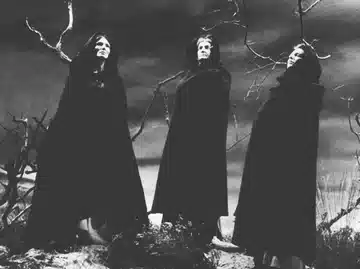
The Inquisition, established by the Catholic Church in the 13th century, aimed to convert heretics to Catholicism. Alongside this mission, it actively encouraged the denunciation and persecution of witches.
By December 1485, Pope Innocent VIII issued a papal decree entitled Summis desiderantes affectibus,which condemned witchcraft and authorized two inquisitors—Jakob Sprenger and Heinrich Kramer—to combat witchcraft throughout Europe.
Accusations ranged widely and absurdly, blaming witches for everything from bad weather to poor harvests and other misfortunes.
Another gruesome practice was searching for the devil’s mark. Because witches were believed to have made pacts with the devil to gain power over people, they were thought to bear a mark—like a signature of their agreement. Accused women were shaved completely in public to check for such marks, like moles or warts. Additionally, their skin was pricked; if they felt no pain or bleeding, it was seen as proof of witchcraft, often leading to execution.
With that, this article on the Real Witches of History comes to a close.Feel free to leave your comments or write to me at amiraasmodea@hotmail.com if you would like me to cast a spell on your behalf.
Since we were children, we've been scared by tales of witches. That's why today, I want to reveal the real history behind these women who truly lived and who, over the course of humanity's journey, were persecuted and burned by the Christian authorities of their time.
TABLE OF CONTENTS
1. The History of Witch Hunts
2. How Were People Accused of Witchcraft?
3. How Were Witches Identified?
4. Notable Real Witches from Around the World
4.1 The Salem Witches
4.2 The Blair Witch (Elly Keyword)
4.3 Alice Kyteler
5. Royal Sorceresses
The History of Witch Hunts
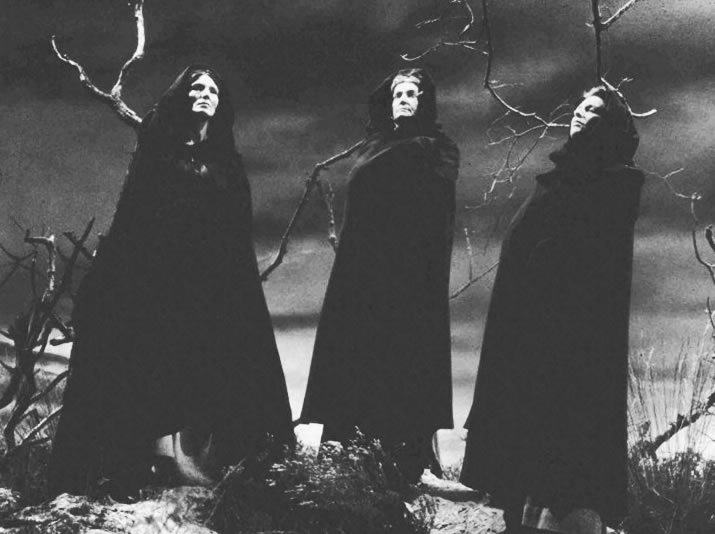
Centuries ago, Europe was gripped by a widespread fear of witches, which sparked relentless witch hunts and their enforcement. This was especially prevalent in regions like Germany, Belgium, France, northern Italy, Holland, Luxembourg, and Switzerland. According to the book Witch Hunts in the Western World, millions perished across Europe and its colonies, suffering through countless tortures, arrests, and interrogations during this dark period.The Inquisition, established by the Catholic Church in the 13th century, aimed to convert heretics to Catholicism. Alongside this mission, it actively encouraged the denunciation and persecution of witches.
By December 1485, Pope Innocent VIII issued a papal decree entitled Summis desiderantes affectibus,which condemned witchcraft and authorized two inquisitors—Jakob Sprenger and Heinrich Kramer—to combat witchcraft throughout Europe.
How Were People Accused of Being Witches?
Most often, about 70% of those accused were widows, who had little to no one to defend them. Others targeted included the poor, elderly women, and herbalists. No one was truly safe—rich or poor, political figures, royalty, men or women—anyone could be branded a witch.Accusations ranged widely and absurdly, blaming witches for everything from bad weather to poor harvests and other misfortunes.
How Were Witches Identified?
One common method involved binding suspected women and throwing them into cold water, which had supposedly been blessed. If they sank, it was taken as a sign of innocence, and they were pulled out. But if they floated, it was considered proof of witchcraft, and they were executed immediately. In another test, suspects were weighed, as it was believed that witches had no weight.Another gruesome practice was searching for the devil’s mark. Because witches were believed to have made pacts with the devil to gain power over people, they were thought to bear a mark—like a signature of their agreement. Accused women were shaved completely in public to check for such marks, like moles or warts. Additionally, their skin was pricked; if they felt no pain or bleeding, it was seen as proof of witchcraft, often leading to execution.
Prominent Real Witches Who Lived
The Salem Witches
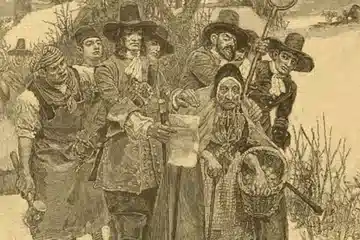
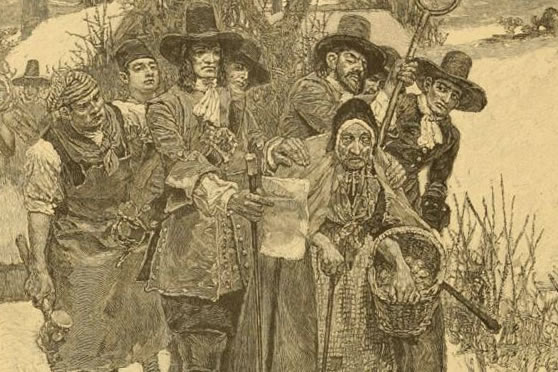
In 1692, twenty people were executed in Salem, located in what is now Massachusetts, and around 200 were arrested on charges related to witchcraft. The Salem trials lasted four years, during which jurors later admitted mistakes and pleaded for mercy. The villagers claimed that the spirits of the accused witches manipulated the jurors, fueling what can only be described as a case of collective hysteria.The Blair Witch (Elly Keyword)
In 1785, Elly Keyword was accused of deceiving several children in her village and drawing their blood. As a result, she was expelled from the village, chained to a wagon, and pushed into the woods, where she is believed to have died.Alice Kyteler
Alice Kyteler is known as the earliest witch recorded in history. Originating from Ireland, she was a beautiful and sophisticated woman who earned a reputation for manipulating men to satisfy her desires. She was an imposing and independent figure—something quite rare at the time, as most women in the region were submissive. Before she could be executed, she escaped to England and was never heard from again.Royal Sorceresses
These accounts tell the stories of the true witches of the world—those who were executed for practices that were considered unusual or threatening in their time. But the question many still wonder about today is whether witches continue to exist. This remains a great mystery, one that continues to intrigue countless people.With that, this article on the Real Witches of History comes to a close.Feel free to leave your comments or write to me at amiraasmodea@hotmail.com if you would like me to cast a spell on your behalf.
Bibliography
- Doreen Valiente. An ABC of Witchcraft Past and Present. Robert Hale, an imprint of The Crowood Press, 1999. ISBN 9780719826917.
- Buckland, Raymond. Buckland's Complete Book of Witchcraft. Llewellyn Publications, 1986. ISBN 9780875420509. Source.
- Gerald Gardner. The Meaning of Witchcraft. Aquarian Press, 1982. ISBN 1950506789. Source.
- Gardner, Gerald. Witchcraft Today. Rider & Company, 1954. Source.
- Scott Cunningham. Wicca: a guide for the solitary practitioner. WICCA A GUIDE FOR THE SOLITARY PRACTITIONER SCOTT CUNNINGHAM Llewellyn Publications, 1993.